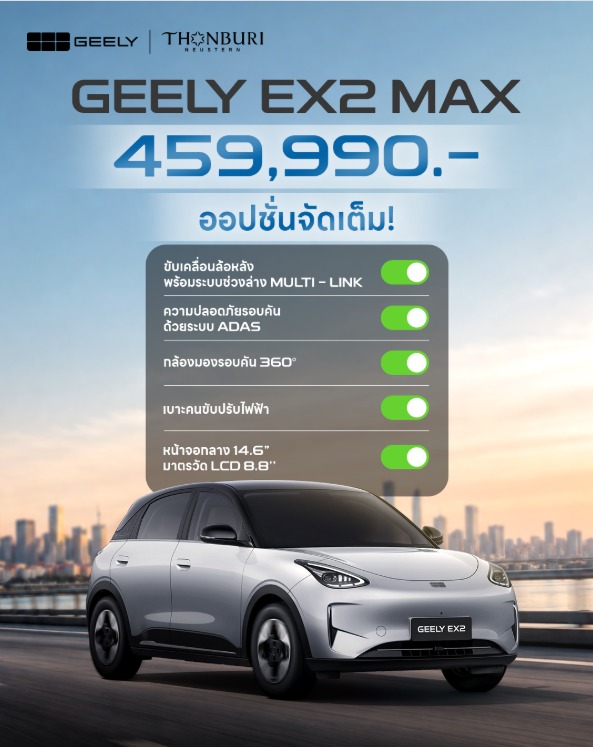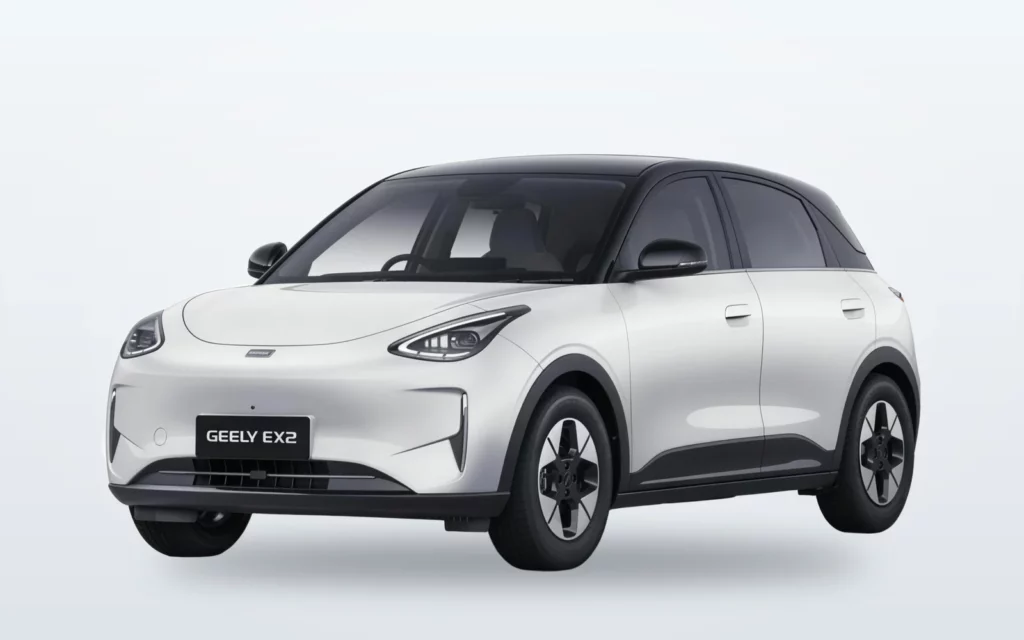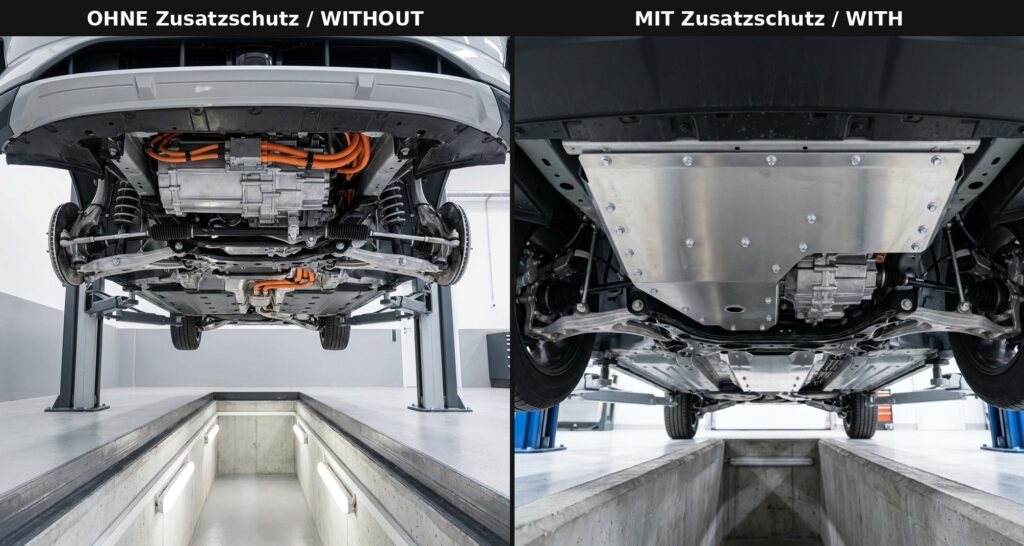
A photo from a Thai EV workshop caught our eye: a car on the lift, with a freshly fitted protection plate underneath – not over the battery, but under the drive unit (electric motor and gearbox) at the front. At first glance it looks sensible. But is an extra plate like this really worth it – or is it expensive add-on gear most owners don’t actually need? We looked at the facts. In the end, we mostly want to hear your opinion.
Before / after: what changes underneath
The featured image shows the difference: on the left, the underbody without extra protection – the electric motor, gearbox and cables sit exposed. On the right, the same area with an additional bolted-on aluminium plate under the drive unit.
Why this area is exposed in the first place
In an EV, both the large, flat battery and the drive unit (electric motor and gearbox) sit in the underbody – lower and more exposed than in many combustion cars. That’s exactly the zone hit first by kerbs, potholes and Thailand’s ever-present speed bumps.
What manufacturers already build in
Most EVs already come from the factory with steel, aluminium or composite protection plates – over the battery enclosure and around the drive unit. Manufacturers treat impacts with gravel or road debris as a normal, foreseeable part of driving – which is why these areas are reinforced from the start.
Extra plate under the drive unit: pros and cons
- Pro: extra margin against stone impacts and kerb contact right under the motor and gearbox, especially on poorly maintained roads
- Con: added weight and cost, sometimes overlapping with the factory protection
- Important: doesn’t protect against flooding – that depends on the sealing of the battery and drive unit (e.g. IP67/IP68), not a metal plate underneath
- Worth checking: whether an aftermarket plate affects cooling airflow to the motor
The Thailand factor: speed bumps, roadworks, rainy season
Unmarked speed bumps, construction-site ridges and flooded roads during the rainy season make this question more concrete here than elsewhere. Whether an extra plate under the drive unit pays off depends a lot on your own driving profile: lots of city driving over bumps, provincial roads, or mostly highway and well-paved sois.
What do you think?
That’s exactly what we want to hear from you: have you fitted an extra protection plate under the drive unit – and would you do it again? Or is the factory protection enough? Share your experience in the comments on our Facebook page.
Frequently asked questions
Do EVs already have protection for the battery and drive unit from the factory?
Usually yes. Most manufacturers fit protection plates over the battery enclosure and around the drive unit from the factory, since contact with gravel and kerbs is considered a normal part of driving.
Does an extra plate under the drive unit also protect against flooding?
No. Protection against water depends on the sealing of the battery and drive unit themselves (typically IP67 or IP68), not on an additional mechanical plate underneath.
How much does the extra weight affect range?
Depending on the material, usually a low single- to low double-digit kilogram range. The effect on range is generally small, but not zero.
Is it worth fitting one for everyday driving in Thailand?
That depends on your driving profile and routes – which is exactly the question we’re collecting your experiences on.
For more news and discussions about Geely in Thailand, follow our Facebook page.
General discussion, as of June 2026; not a product test or purchase recommendation, images AI-generated. Independent, unofficial channel – not affiliated with Geely Auto.